
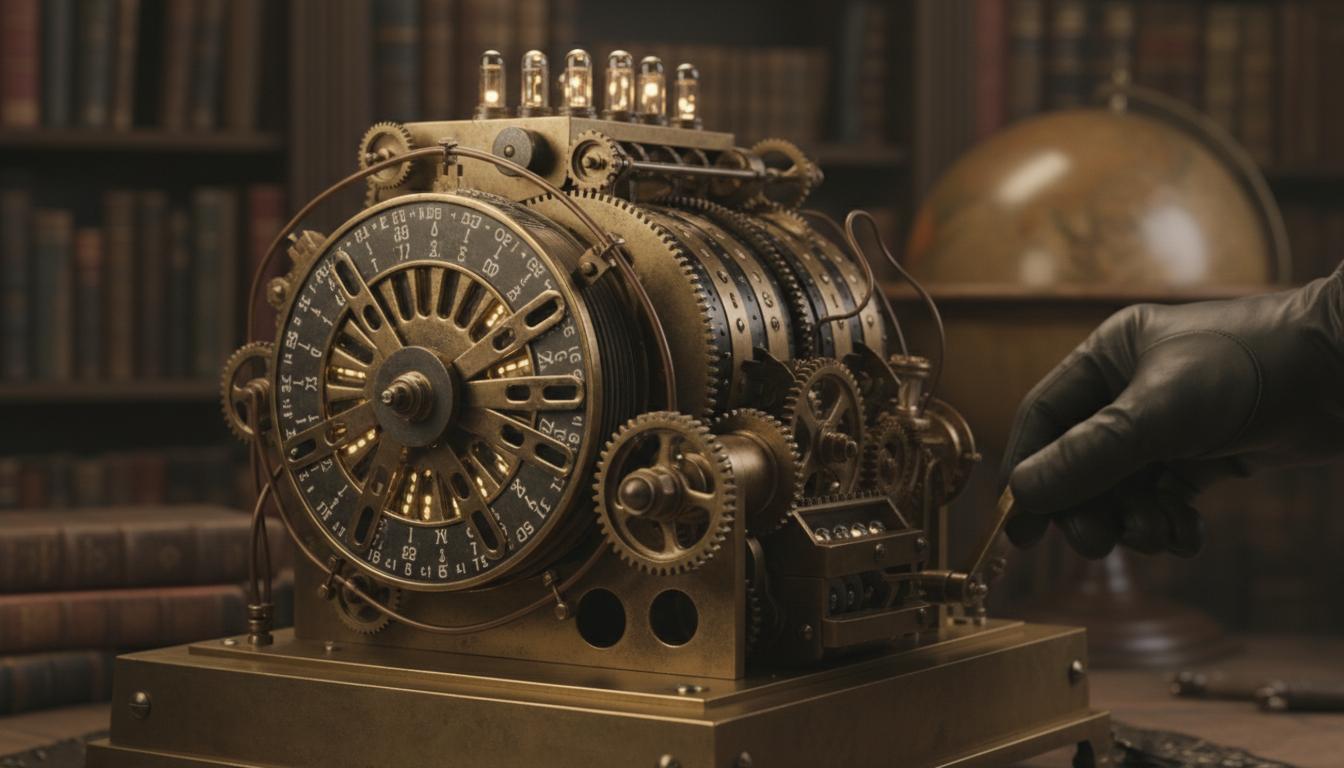
If you’ve ever circled a code cracker in the paper over a flat white and wondered how the pros crack it so fast, you’re in the right place. This guide breaks down what a code cracker is, how it works, the main types you’ll see in Aotearoa New Zealand, and the smartest, safest ways to dive in—whether you love the daily puzzle or want to build real‑world security skills without crossing any lines.
What is
A code cracker is either a word puzzle where each letter is replaced by a number, or a broader term for breaking secret codes and ciphers. In New Zealand, most people meet the puzzle version first—often called a codeword or code breaker—featured in newspapers and puzzle magazines. In cybersecurity, “code cracking” refers to analysing and decoding protected information, which must be done ethically and legally.
In short: code cracker (the puzzle) is a substitution game; code cracking (the practice) is the study of ciphers and how to analyse them, typically in controlled, lawful settings.
How it works
For the puzzle
A code cracker puzzle uses a 26-letter alphabet. Each cell shows a number; each number maps to one letter. Your job is to uncover the mapping and complete all the words on the grid. Usually you’re given a few starter letters (for example, 4 = A, 19 = E) to begin the chain reaction.
Solving relies on:
- Letter frequency: in English, E, A, R, I, O, T show up a lot.
- Word patterns: single-letter words are usually A or I; common pairs include TH, HE, ER, AN.
- Cross-checking: a correct letter must fit all words where that number appears.
- NZ/British spelling: expect colour, organise, centre rather than US variants.
For ciphers and “real” code cracking
Classic ciphers hide messages using rules and often a key. Two broad families:
- Substitution: replace each letter with another letter or symbol (e.g., Caesar shift, simple substitution).
- Transposition: shuffle letters according to a pattern so they look scrambled but are still the same letters in a new order.
Modern encryption is mathematically robust and designed not to be cracked by guesswork. Analysing or “cracking” protected data on systems you don’t own or have permission to test is illegal in New Zealand. If you want hands‑on experience, use legal training grounds such as capture‑the‑flag (CTF) platforms and approved cyber ranges.
Types / examples
Code cracker (codeword) puzzle
The newspaper favourite: a grid of interlocking words with numbers instead of letters. Fill the grid by deducing the number‑to‑letter mapping. You need logic, vocabulary, and patience. Many NZ publications run a daily or weekly version.
Cryptograms
Short quotes or phrases encrypted with a substitution cipher. Unlike a full grid of cross‑checking words, cryptograms are a single block of text. They’re good for building letter‑pattern instincts.
Classic ciphers for learning
Teachers and hobbyists use Caesar shifts, Atbash, and Vigenère to introduce the idea of keys and patterns. These are safe, educational, and fun for family puzzle nights.
Escape-room and tabletop challenges
Commercial game kits and escape rooms in NZ often weave light code cracking into clues—nothing illegal, just story‑driven puzzles involving numbers, symbols, and simple ciphers.
Ethical cybersecurity training
CTF events and online labs simulate real security problems in a legal sandbox. You practise analysis, decoding traffic you’re authorised to inspect, and understanding cryptographic concepts without touching anyone’s actual data.
Quick comparison
| Type | What it is | Skill focus | Tools | Where Kiwis find it | Typical difficulty |
|---|---|---|---|---|---|
| Code cracker (codeword) | Numbered grid; each number is one letter | Letter frequency, pattern spotting, vocab | Pencil, eraser, dictionary (NZ English) | Newspapers, puzzle books, apps | Easy to challenging |
| Cryptogram | Encrypted quote or phrase | Substitution logic, context clues | Pen, scratch paper | Puzzle pages, education sites | Easy to medium |
| Classic cipher challenge | Caesar/Vigenère tasks for learning | Keys, shifts, modular thinking | Worksheet, basic calculator | Schools, clubs, hobby forums | Beginner to intermediate |
| Ethical CTF | Legal security training in a sandbox | Protocol analysis, crypto concepts | Laptop, approved training platform | University clubs, online ranges | Intermediate to advanced |
Pros and cons
Benefits of the code cracker puzzle
- Sharpens logic and vocabulary without screens.
- Travel‑friendly—perfect for the commute or bach weekends.
- Low barrier to entry; quick wins build confidence.
- Great for learners of English to reinforce spelling, including NZ variants.
Benefits of learning code cracking concepts
- Improves pattern recognition and analytical thinking.
- Builds a foundation for cybersecurity studies.
- Useful in STEM classrooms and coding clubs.
Potential downsides
- Can stall without a strategy; guesswork leads to dead ends.
- NZ/British spelling may trip up solvers used to US variants.
- In cybersecurity contexts, acting outside authorised environments is illegal and risky.
How to use or choose
Step‑by‑step: solve a code cracker efficiently
- Scan starter letters. Most puzzles reveal 2–3 mappings. Enter them across the grid.
- Hunt for one‑letter words. They’re almost always A or I. Use crossings to decide which.
- Mark common endings. Look for patterns like ‑ING, ‑ED, ‑ER, ‑LY, and plurals ending in ‑S.
- Target frequent numbers. The number that appears most is likely E; next most common often A or T. Confirm with real word shapes, not just counts.
- Spot doubles. Side‑by‑side identical numbers may be LL, EE, OO, SS, or TT. Fit them where natural.
- Work the crosses. Every correct letter should make neighbouring words more plausible. If a guess makes nonsense elsewhere, backtrack early.
- Think NZ English. Prefer colour, centre, travelling, metre, organise. This alone solves many near‑misses.
- Leave blanks when unsure. Progress elsewhere often clarifies the stubborn spots.
- Use light pencil notes. Jot possible letters above tricky numbers (e.g., 12: E/A/T) and erase as you confirm.
- Do a final sweep. Recheck the whole grid for consistent mappings—each number must be one letter, and each letter used once.
Choosing the right code cracker resource
- Beginners: start with small grids and generous starter letters. Look for “easy” labels.
- Intermediate: mix code cracker and cryptogram practice to strengthen pattern sense.
- Advanced: seek themed sets or minimal‑clue grids to stretch your logic.
- Dictionary fit: prefer NZ/British English word lists to match local spellings.
- Format: print for pen‑and‑paper fans; apps for on‑the‑go solving with undo/redo and hint toggles.
- Accessibility: choose high‑contrast layouts and scalable text sizes for comfortable reading.
- For kids: pick puzzles with shorter words and picture cues; turn progress into a game with timers or stickers.
Learning “code cracking” safely
- Stick to legal platforms. University clubs and online CTFs provide permission‑based challenges.
- Focus on concepts, not intrusion. Study how classic ciphers work and why modern crypto is secure.
- Know the law. In NZ, unauthorised access or interference with computer systems is illegal under the Crimes Act. When in doubt, don’t touch it.
- Build good habits: get written permission before any security testing, and keep learning logs for accountability.
FAQ
What exactly is a code cracker puzzle?
It’s a word puzzle where each letter is replaced by a number. Solve it by uncovering the mapping and filling the grid with real words.
Is code cracking illegal in New Zealand?
Solving puzzles is fine. Accessing or attempting to access someone else’s data or systems without permission is illegal. New Zealand’s Crimes Act includes offences for unauthorised access and interference. Learn within authorised, purpose‑built environments.
How is a code cracker different from a cryptogram?
A code cracker uses a crossword‑style grid with many crossing words; a cryptogram is a single encrypted phrase. Code crackers offer more cross‑checking; cryptograms rely more on context.
Any quick tips for beginners?
- Start with one‑letter words and common endings.
- Use letter frequency as a hint, not a rule.
- Prefer NZ spellings when choices are close.
Are there apps for code cracker puzzles?
Yes. Many puzzle apps include code cracker or codeword modes with adjustable difficulty and hint systems. Choose ones that support NZ/British spelling.
What if I get stuck?
- Take a short break; fresh eyes help.
- Erase the last uncertain guesses and rebuild from firm letters.
- Scan for new doubles or vowel placements you missed.
Does NZ spelling really matter?
Often. Many local puzzles use NZ/British variants—colour, metre, practise (verb), defence. Matching the house style increases your accuracy.
Can code crackers help kids learn?
Absolutely. They reinforce spelling, pattern recognition, and patience. Keep sessions short and celebrate small wins to maintain momentum.
Can I crack modern encryption with these skills?
No. Modern encryption relies on strong mathematics and keys, not letter‑by‑letter guesswork. The value here is learning patterns and thinking logically, which transfers well to legitimate cybersecurity training.
Where can I report or learn about cyber issues in NZ?
For guidance and incident reporting, New Zealanders commonly turn to CERT NZ and Netsafe. They provide practical advice on staying safe online and what to do if something goes wrong.
Final thought
A code cracker is a brilliant daily workout for the brain and a gentle gateway into the world of codes. Keep it legal, keep it local with NZ spelling, and enjoy the satisfying click when a stubborn number finally reveals its letter. Happy cracking.